

Stirring Up Trouble
Is Your Horse's "Supplement Soup" Doing More Harm Than Good?

In our quest to provide the very best for our horses, it's easy to fall into the "more is better" trap. Our feed rooms can quickly become a veritable alphabet soup of containers and powders—a vitamin here, a joint supplement there, and a hoof booster for good measure. But are we accidentally creating a dietary disaster in the process?
While each product promises incredible benefits, when multiple supplements contain the same nutrients, your horse can end up with dangerous imbalances. This is a particularly common issue with minerals like selenium and iron, or fat-soluble vitamins like A, D, and E. Unlike water-soluble vitamins that are easily excreted, these can build up in a horse's system to toxic levels, leading to serious health issues like hoof damage, mane and tail loss, or even organ damage.
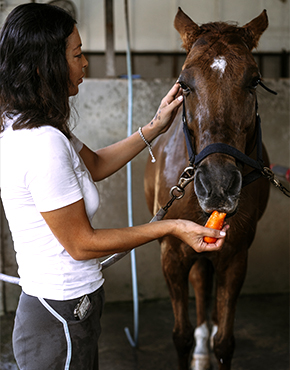 The truth is, most horses don't need half of what's being marketed to them. Their foundational diet—the hay and pasture they eat—provides the vast majority of their nutritional needs. That's why the first and most critical step is to get a professional forage analysis. This test is a game-changer; it tells you exactly what your hay is providing and reveals any true gaps in the diet.
Once you know your starting point, you can assess the total levels of nutrients from all sources in the diet—forage, grain, and any existing supplements. If you find your horse truly needs a boost, consider a simple, balanced vitamin and mineral supplement that covers the basics without pushing them into a "too much" zone.
So, before you add another bottle to the mix, take a playful but professional approach. Check your labels, analyse your forage, and remember that sometimes, the most effective feeding plan is also the simplest.